

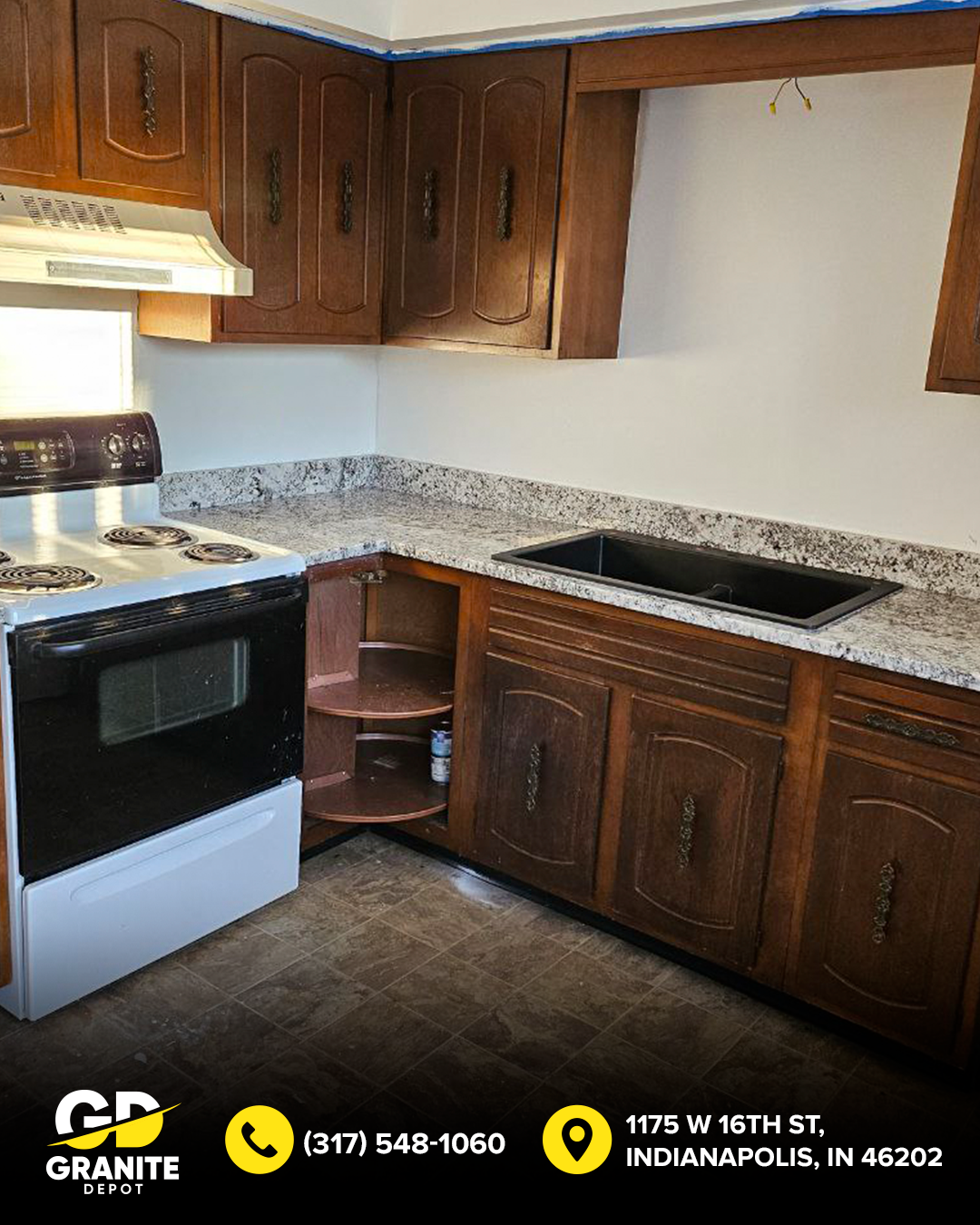
Granite is one of the most popular choices for kitchen and bathroom countertops. Known for its strength, beauty, and resilience, granite has earned its place in many homes. But when it comes to granite, one of the most common questions that arises is: how hard is granite? Understanding the hardness of granite is crucial, especially for homeowners considering granite countertops for their kitchens and bathrooms. In this article, we’ll delve into the hardness of granite, what makes it so durable, and why it’s an ideal choice for countertops.
At Granite Depot of Indianapolis, we understand the importance of choosing the right material for your countertops. As a trusted name in the industry, we work with skilled countertop fabricators Plainfield, IN, to ensure every granite countertop is precisely cut and polished to perfection.
1. What Determines the Hardness of Granite?
Granite is a naturally occurring igneous rock composed mainly of quartz, feldspar, and mica. The hardness of granite is primarily determined by the minerals it is made up of, particularly the amount of quartz it contains. Quartz is one of the hardest minerals on the Mohs hardness scale, which is used to measure the scratch resistance of various minerals.
- Quartz – Quartz has a hardness of 7 on the Mohs scale. This means it’s relatively resistant to scratching and is one of the key contributors to granite’s overall durability.
- Feldspar – Feldspar, the most abundant mineral in granite, has a hardness of 6, which also contributes to the stone’s hardness and resistance to wear.
- Mica – Mica, present in smaller amounts, has a hardness of around 2. While mica is softer than the other minerals in granite, it doesn’t significantly affect the overall hardness of the stone.
On the Mohs scale, granite generally scores between 6 and 7, meaning it is quite hard and resistant to scratches. This is one of the reasons why granite countertops are so highly regarded for their durability.
2. Granite’s Hardness vs. Other Countertop Materials
When considering granite for countertops, it’s helpful to compare its hardness with other materials commonly used in kitchens and bathrooms. Let’s look at how granite stacks up against other popular countertop choices:
- Quartz – Quartz countertops are engineered from natural stone mixed with resin. Quartz typically ranks at 7 on the Mohs scale, similar to granite. However, due to the resin, quartz countertops may be less prone to chipping than granite in certain situations, though both are highly durable.
- Marble – Marble is a softer stone compared to granite, ranking between 3 and 5 on the Mohs scale. This makes marble more susceptible to scratches and staining. While marble is elegant, it’s not as tough as granite and requires more maintenance.
- Soapstone – Soapstone ranks lower on the Mohs scale, around 2-3, making it much softer than granite. It is prone to scratching and denting but is still a popular choice for some due to its unique aesthetic and smooth feel.
- Laminate – Laminate countertops, although affordable, are much softer than granite. Laminate surfaces can be easily scratched and are prone to damage from heat and moisture.
As you can see, granite is one of the hardest natural stones available for countertops, offering superior durability when compared to many other materials.
3. Why is Granite Hardness Important for Countertops?
Granite’s hardness plays a significant role in its suitability for countertops. Here are some of the key benefits of granite’s hardness:
Scratch Resistance
Because granite is so hard, it is highly resistant to scratches. This makes it an excellent choice for kitchens, where knives, pots, and other utensils are frequently used. If you’re considering granite countertops, you can be confident that the surface will hold up well against the normal wear and tear of everyday life.
Durability
Granite’s hardness contributes to its overall durability. It can withstand impacts and heavy use without showing signs of damage, making it perfect for high-traffic areas like the kitchen. This is why many homeowners choose granite countertops, as they are a long-term investment that can endure for many years with proper care.
Heat Resistance
Granite’s hardness also gives it exceptional heat resistance. While it’s always advisable to use trivets or hot pads, granite countertops can generally handle hot cookware without being damaged. Other softer materials, like laminate, can warp or burn when exposed to high heat.
Low Maintenance
Thanks to its hardness, granite is less likely to scratch, chip, or stain compared to other countertop materials. When properly sealed, granite requires minimal maintenance and can be cleaned with just a gentle cleanser and a soft cloth. For homeowners who want a countertop that can stand the test of time, granite is an excellent choice.
4. How Does Granite Compare to Other Stones in Terms of Hardness?
When choosing a countertop material, many homeowners may wonder how granite compares to other natural stones like marble, quartzite, and slate in terms of hardness. Here’s a breakdown of how granite stacks up:
- Marble – As previously mentioned, marble ranks lower on the Mohs scale compared to granite, which makes it more vulnerable to scratches and staining. While marble is beautiful and often used in high-end kitchens, it does require more maintenance due to its softer surface.
- Quartzite – Quartzite, often confused with quartz, is a naturally occurring stone that is even harder than granite, typically ranking around 7 on the Mohs scale. It has a similar appearance to marble but is much more durable and resistant to scratches.
- Slate – Slate is another natural stone that’s used for countertops, but it ranks at around 3 on the Mohs scale, making it much softer than granite. While it can still be durable in low-traffic areas, it’s more prone to scratching and damage in the kitchen.
While granite is not the hardest stone on the market, it strikes a perfect balance between durability and aesthetic appeal. It offers impressive strength without being too brittle, making it ideal for countertops in homes that are used frequently.
5. The Role of Granite Fabricators in Creating Strong Countertops
When you choose granite for your countertops, you want to ensure that the installation is done correctly to preserve the stone’s integrity. Countertop fabricators Plainfield, IN, play a critical role in shaping granite slabs into custom countertops that fit your space perfectly. They carefully cut, shape, and polish the granite, ensuring that every edge is smooth and every corner is precise.
Professional fabricators also apply protective sealants to granite, which helps preserve its surface and protect it from stains. When working with experienced fabricators, you can be confident that your granite countertops will be installed correctly and will retain their strength and durability for years to come.
6. Granite’s Hardness and Its Long-Term Benefits
Granite’s exceptional hardness means that your countertops will last a long time. In fact, granite can last for decades with proper care and maintenance. The stone’s resistance to wear and tear ensures that it won’t lose its charm or functionality, making it a solid investment for homeowners.
Additionally, as granite is resistant to scratching and damage, it will maintain its pristine appearance even in high-traffic areas like kitchens. Whether you’re hosting a dinner party or cooking for your family, granite countertops will continue to impress with their durability and timeless beauty.
Conclusion
Granite is a hard, durable material that makes an excellent choice for countertops in kitchens, bathrooms, and other high-traffic areas. With a hardness rating of 6-7 on the Mohs scale, granite is resistant to scratching, staining, and heat damage, making it a reliable choice for homeowners looking for a long-lasting countertop solution. If you’re in the market for granite countertops, Granite Depot of Indianapolis offers top-notch service and expert craftsmanship. Our experienced countertop fabricators Plainfield, IN, can help you select the perfect granite slab for your home and ensure it’s installed to perfection.
Granite’s exceptional strength and versatility make it the ideal material for countertops, and with proper care, it can last a lifetime. Consider granite for your next home renovation project, and enjoy the beauty and durability of this remarkable natural stone.