


When planning a kitchen renovation, homeowners often wonder whether the sink should be installed before or after the countertops. In most cases, the countertop is installed first, and the sink is attached afterward. However, the exact sequence depends on the sink style, countertop material, and installation method.
At Granite Depot of Indianapolis, we help homeowners choose natural stone and engineered surfaces that work with their preferred sink designs. Understanding the installation process can help you plan your renovation, coordinate plumbing work, and avoid unnecessary delays.
If you are preparing for a new kitchen, working with experienced countertop installers Indianapolis, IN can make the process more straightforward. From measuring and cutting the sink opening to positioning the countertop, every stage needs careful planning.
Are Sinks Installed Before or After Countertops?
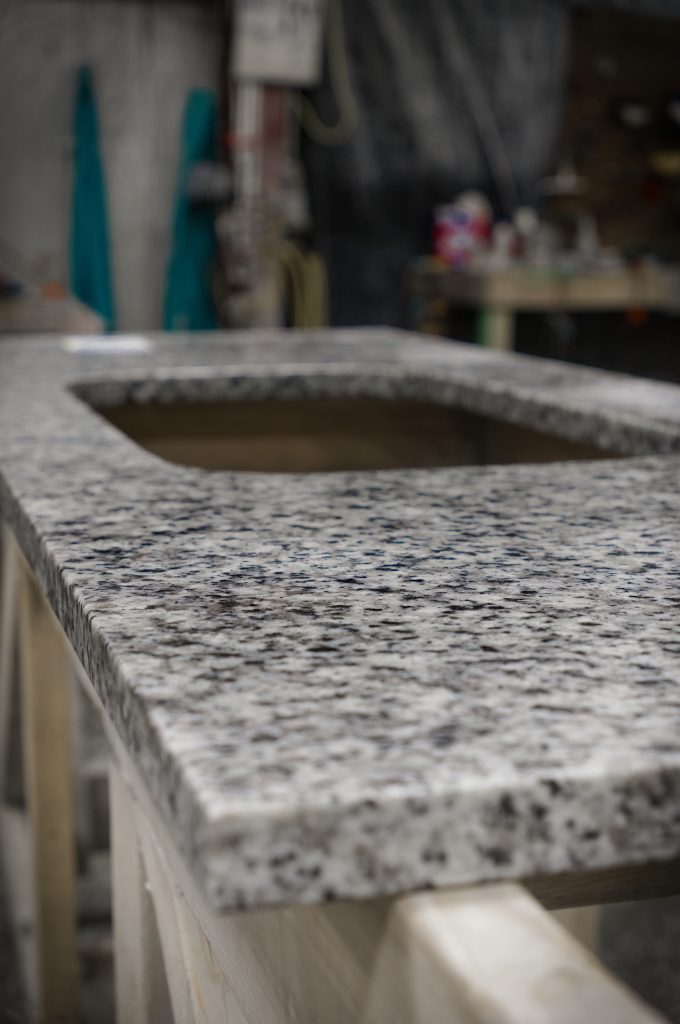
Most sinks are installed after the countertop is in place, especially when homeowners choose an undermount sink. The countertop must first be measured, fabricated, and positioned so the sink opening aligns correctly with the cabinet and plumbing.
For a typical undermount installation, the process looks like this:
- We measure the kitchen cabinets and create a countertop template.
- The sink dimensions and mounting requirements are confirmed.
- The countertop is fabricated, including the sink cutout.
- The countertop is installed and secured to the cabinets.
- The sink is attached beneath the countertop.
- A plumber connects the drain, faucet, and water supply lines.
This order allows the sink to fit precisely beneath the finished stone surface. It also gives the installer access to the underside of the countertop when securing the sink clips or mounting brackets.
However, not every sink follows the same sequence. Drop-in sinks, farmhouse sinks, and integrated sinks have different installation requirements.
Does the Type of Sink Change the Installation Order?
Yes. The sink style is one of the most important factors in determining when it should be installed. Some sinks are positioned after the countertop, while others require preparation before the countertop is placed.
Here is how the most common sink types compare:
| Sink type | Typical installation order | Important detail |
|---|---|---|
| Undermount sink | After countertop installation | Attached beneath the countertop |
| Drop-in sink | Usually after countertop installation | Lowered into the finished opening from above |
| Farmhouse sink | Often before countertop installation | Cabinet and support structure must be prepared |
| Integrated sink | Fabricated as part of the countertop | Installed as one coordinated unit |
When Is an Undermount Sink Installed?
An undermount sink is typically installed after the countertop. It sits beneath the countertop surface, creating a clean appearance without a visible rim around the sink opening.
This style is popular with granite, quartz, quartzite, and marble countertops. Since there is no raised edge, homeowners can wipe crumbs and water directly into the sink.
The sink is secured with mounting clips, brackets, or another approved support system. The installer also applies an appropriate sealant around the sink rim to help prevent water from reaching the cabinet below.
For this type of project, countertop installers Indianapolis, IN need accurate sink measurements before fabrication begins. Even a small difference in the sink dimensions can affect the opening and the final fit.
When Is a Drop-In Sink Installed?
A drop-in sink is generally installed after the countertop has been placed. Unlike an undermount model, it has a rim that rests on top of the countertop.
The sink is lowered into the prepared opening, and the rim covers the cut edge. This design is relatively straightforward and can work with many countertop materials.
Drop-in sinks are available in stainless steel, porcelain, cast iron, and composite materials. Models such as the Kohler Brookfield and Elkay Quartz Classic offer different appearances and configurations.
The main advantage is that the sink can be replaced without removing the entire countertop, provided the replacement fits the existing opening.
Does a Farmhouse Sink Need to Be Installed First?
Often, yes. A farmhouse sink, also called an apron-front sink, usually requires cabinet modifications and a dedicated support structure before the countertop is installed.
Unlike a standard undermount sink, a farmhouse sink has a front panel that remains visible. The cabinet must accommodate the apron, and the sink needs adequate support because some models are quite heavy.
For example, fireclay and cast-iron farmhouse sinks can weigh significantly more than stainless steel alternatives. The cabinet may need a reinforced platform or custom adjustments to carry the load safely.
We recommend selecting the farmhouse sink before the countertop fabrication stage. This allows the cabinet preparation, countertop measurements, and sink cutout to be coordinated correctly.
What Happens During Countertop Installation?
Countertop installation involves more than placing a stone slab on top of the cabinets. Accurate measurements, fabrication, transportation, and careful positioning all contribute to a successful result.
At Granite Depot of Indianapolis, our countertop projects follow several important stages.
Templating and measurements
First, the cabinets must be installed, leveled, and ready for measurement. We create a template that records the countertop dimensions, wall angles, edges, and sink location.
The sink model should already be selected at this point. Its measurements help determine the size and position of the cutout.
Fabrication and cutting
After templating, the measurements are used to fabricate the countertop. The sink opening is cut according to the selected sink specifications, and the edges are finished.
For natural stone, the fabrication process may involve cutting, polishing, and reinforcing specific areas. Quartz surfaces are also cut and finished using specialized equipment.
Delivery and installation
Once fabrication is complete, the countertop is transported to the home and positioned on the cabinets. The installation team checks the fit, joins separate sections where necessary, and secures the surface according to the material and project requirements.
Experienced countertop installers Indianapolis, IN pay particular attention to the sink area because it must be properly supported and aligned. The countertop should sit securely before the sink is mounted.
Sink mounting and plumbing
For an undermount sink, the sink is attached beneath the countertop after the surface is installed. The plumber can then connect the faucet, drain, garbage disposal, and water supply lines.
In many projects, plumbing is completed on the same day or within the next day after the countertop installation, depending on scheduling and the complexity of the connections.
How Long Does Sink and Countertop Installation Take?
The countertop installation itself often takes several hours, while the complete process can take one to three weeks from initial measurements to the finished surface. The exact schedule depends on the material, fabrication workload, sink style, and kitchen preparation.
Here is a general planning estimate:
| Project stage | Typical timeframe |
|---|---|
| Initial consultation and material selection | 1–3 days |
| Cabinet preparation and templating | 1–2 days |
| Countertop fabrication | 5–10 business days |
| Countertop installation | 3–6 hours |
| Sink mounting and sealing | Same day or next day |
| Plumbing reconnection | 1–2 hours in a straightforward project |
These are estimates rather than guaranteed deadlines. Custom edges, unusual layouts, multiple countertop sections, and special-order sinks can extend the schedule.
If you are coordinating several contractors, arrange plumbing work in advance. Your plumber should know when the countertop will be installed so the sink and faucet connections can be completed without unnecessary waiting.
How Much Does It Cost to Install a Sink With New Countertops?
The cost depends on the sink material, countertop choice, cutout requirements, mounting method, and plumbing work. A straightforward sink installation may cost less than a farmhouse sink project that requires cabinet modifications.
The following figures are general U.S. planning estimates, not a project-specific quote:
| Item | Estimated price range |
|---|---|
| Basic stainless steel kitchen sink | $100–$400 |
| Mid-range composite or granite-composite sink | $250–$700 |
| Fireclay farmhouse sink | $400–$1,200+ |
| Sink installation labor | $150–$400 |
| Additional plumbing work | $100–$300+ |
| Cabinet modifications for farmhouse sink | $200–$600+ |
Countertop costs are separate and depend on the material and square footage. As a broad estimate, installed quartz may cost around $50–$120 per square foot, while granite can range from approximately $40–$100 per square foot. Premium quartzite and marble selections may cost more.
A few details can affect the final price:
- Whether the sink opening is included in the countertop fabrication quote.
- Whether the existing sink can be reused.
- Whether new faucet holes are required.
- Whether the cabinets need reinforcement or modification.
- Whether plumbing connections need to be relocated.
Before starting a renovation, ask for a clear breakdown of fabrication, installation, sink mounting, and plumbing costs. This makes it easier to compare estimates and understand what is included.

Which Countertop Materials Work Best With Different Sinks?
Most common kitchen sink styles can be paired with several countertop materials, but the weight, finish, and maintenance requirements should be considered.
Granite is a natural stone that works well with undermount and drop-in sinks. It offers distinctive patterns and good durability, although periodic sealing may be recommended depending on the stone.
Quartz is an engineered surface made from natural quartz and resins. It is available in a wide variety of colors and patterns, including marble-inspired designs. It is nonporous and generally does not require sealing.
Quartzite is a natural stone known for its distinctive veining and strength. It can create a beautiful pairing with an undermount stainless steel sink, although sealing and proper maintenance are important.
Marble offers an elegant, timeless appearance. However, it is more susceptible to etching and staining than many other countertop options, so homeowners should understand its maintenance requirements before choosing it for a busy kitchen.
When selecting a sink, consider the overall combination rather than looking at the sink and countertop separately. For example, a stainless steel undermount sink pairs naturally with many granite and quartz colors, while a white farmhouse sink can complement a classic kitchen with marble-look quartz.
Our team at Granite Depot of Indianapolis can help you explore available stone options and choose a surface that suits your kitchen design.
What Mistakes Should You Avoid During Sink and Countertop Installation?
The most common problems happen when the sink, cabinets, countertop, and plumbing are not coordinated before fabrication begins. A little preparation can prevent expensive adjustments later.
Avoid these mistakes:
- Choosing the sink too late. The countertop cutout must match the sink model and its exact dimensions.
- Installing a farmhouse sink without preparing the cabinet. The cabinet may need structural support and modifications.
- Assuming every sink uses the same mounting method. Undermount, drop-in, and apron-front sinks have different requirements.
- Ignoring faucet placement. Check the number and position of faucet holes before fabrication.
- Reconnecting plumbing before the sink is secure. The sink should be properly mounted and sealed before the plumbing is put back into service.
- Skipping the final inspection. Check the seal, drain connections, faucet operation, and cabinet interior for leaks.
Professional countertop installers Indianapolis, IN can help coordinate the measurements and fabrication details, but plumbing work should also be handled by a qualified plumber when required.
Why Work With Professional Countertop Installers?
Professional installation helps ensure that the countertop is measured, fabricated, and positioned correctly. This is particularly important around sink openings, where the stone must be cut accurately and supported appropriately.
At Granite Depot of Indianapolis, we work with homeowners who want to upgrade their kitchens with granite, quartz, quartzite, or marble countertops. We help with material selection, measurements, fabrication, and installation.
When comparing countertop installers Indianapolis, IN, consider the following:
- Experience with your chosen countertop material.
- Clear information about templating and fabrication.
- Accurate measurements for sink and faucet openings.
- An explanation of what is included in the installation estimate.
- Coordination with your cabinet and plumbing professionals.
We welcome walk-in visitors to our Indianapolis showroom, where you can explore countertop materials and discuss your project with our team.
Whether you are replacing an old surface or planning a complete kitchen renovation, Granite Depot of Indianapolis can help you understand the countertop process and choose a material that fits your space.
Frequently Asked Questions
Can I use my old sink with a new countertop?
Yes, in many cases. The existing sink can be reused if it is in good condition and compatible with the new countertop thickness, cutout, and mounting method. Confirm the exact dimensions before fabrication begins.
Should the plumber come before or after the countertop installers?
The plumber may need to disconnect the old sink and faucet before countertop removal. The final plumbing connections are usually completed after the new countertop and sink are installed.
Can an undermount sink be installed on granite?
Yes. Granite is commonly used with undermount sinks. The sink is mounted beneath the stone, and the opening is polished and finished during fabrication.
Can I install a sink myself after the countertop is installed?
Some homeowners may be able to install a drop-in sink, but undermount sinks require secure mounting and proper sealing. Because the sink must be supported safely, professional installation is generally recommended.
How long should I wait before using a newly installed sink?
Follow the sealant manufacturer’s instructions and the installer’s recommendations. Depending on the product, curing may take approximately 24 hours or longer. Avoid using the sink until the sealant has cured sufficiently.
Does a new countertop include the sink?
Not necessarily. Countertop quotes vary, so ask whether the price includes the sink, sink cutout, faucet holes, mounting hardware, and plumbing reconnection. The sink itself and plumbing labor may be separate expenses.
What should I choose first: the sink or the countertop?
Choose the sink before the countertop is fabricated. You can select the countertop material first, but the sink model and dimensions should be confirmed before templating and cutting.
Where can I find countertop installation services in Indianapolis?
You can visit Granite Depot of Indianapolis to explore granite, quartz, quartzite, and marble countertop options and discuss your project with our team. We provide countertop fabrication and installation services for homeowners in the Indianapolis area.
Visit Our Indianapolis Showroom
Granite Depot of Indianapolis
1175 W 16th St
Indianapolis, IN 46202
Phone: (317) 548-1060
Stop by our showroom to explore countertop materials, compare colors and patterns, and discuss your kitchen renovation with our team. We look forward to helping you create a countertop that brings your kitchen together.